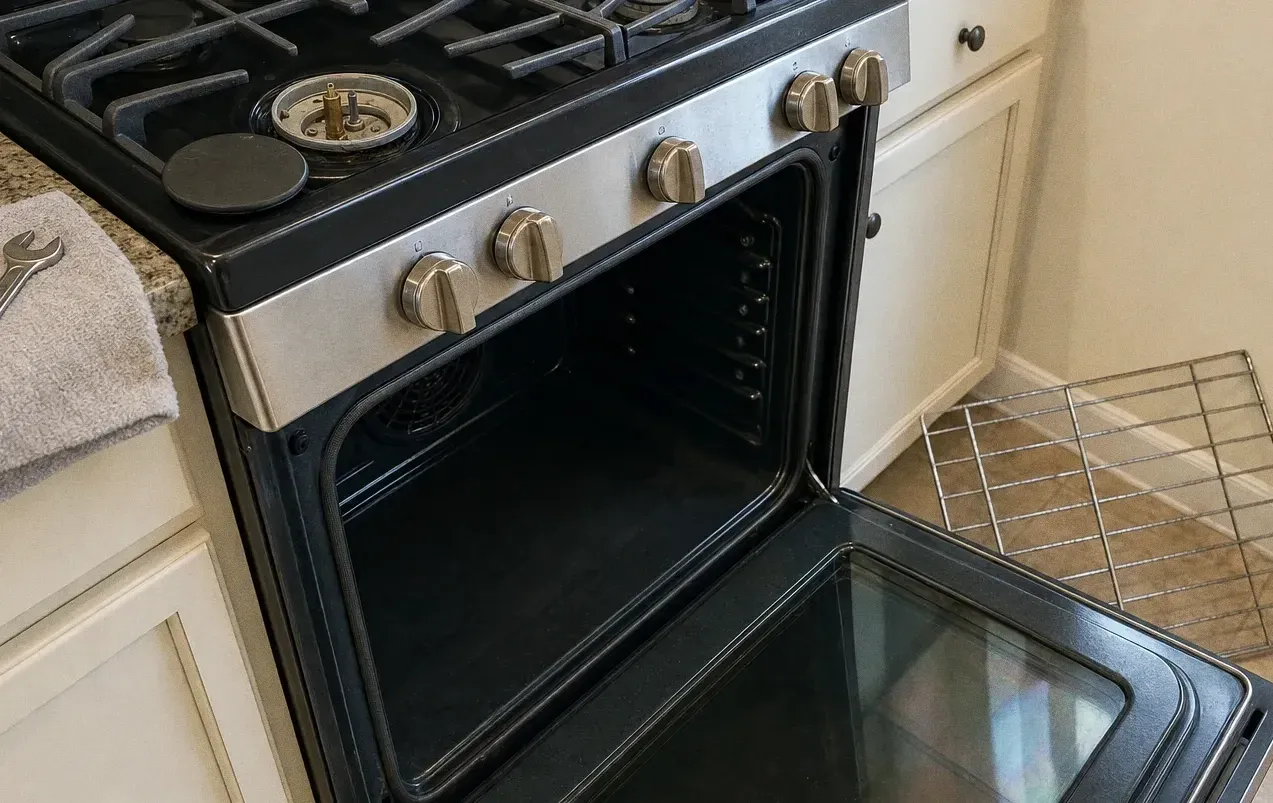
Winchester kitchens are mostly retrofits. A professional range goes into a house built in the 1920s, which means the gas run was extended to reach it, the electrical supply was upgraded around it, and the ventilation was pushed up through two or three floors to a roof cap nobody has looked at since. Half of what looks like an appliance fault is really the installation the appliance inherited, and knowing the difference saves people a part they did not need.
The work stays inside cooking on purpose. Four appliances, one discipline: combustion, heat and airflow. That is enough to keep a fault library deep, and narrow enough that nothing gets learned on your kitchen floor.
There is no shop and no counter. The appliance is worked on where it stands, on floor protection, and the kitchen is left the way it was found.